
If you’ve been researching seaweed supplements, you’ve run into a confusing landscape. Sea moss brands. Kelp tablets. Multi-species blends. Fucoidan extracts. Irish moss capsules. Bladderwrack powders. Each one promising to be the key to better health.
I’m going to give you the honest breakdown — because understanding what’s actually in each category is the only way to make a decision that’s right for you. I’m Greg Good, founder of Sea Veg®, and I’ve spent years researching marine nutrition. I’ll obviously make the case for multi-species blends at the end — but I want to earn that conclusion by actually helping you understand the comparison.
Sea Moss: The Social Media Darling
Sea moss — particularly Irish moss (Chondrus crispus) and Gracilaria species — has exploded in popularity over the past few years. Searches for sea moss grew roughly 70% year-over-year through 2024. You’ve almost certainly seen it in gel form on social media, credited with everything from weight loss to glowing skin.
What sea moss actually delivers:
- Carrageenan — a soluble fiber and prebiotic that supports gut health
- Iodine — though concentration varies widely by species and growing conditions
- Small amounts of iron, calcium, magnesium, and B vitamins
- Natural mucilage compounds with soothing and gut-coating properties
Sea moss is a legitimate food with real nutritional value. Irish moss has been used in traditional Caribbean and Irish cuisine for generations. It’s not a scam.
But here’s the honest part: sea moss is primarily one species (or two at most), and it’s primarily a red seaweed. Red seaweeds have a different nutritional profile than brown seaweeds. Specifically, they don’t contain meaningful amounts of fucoidan — one of the most studied bioactive compounds in marine science. They don’t contain fucoxanthin. And single-species sea moss supplements miss the synergistic nutritional range that comes from combining multiple seaweed types.
Sea moss is popular because it’s visible on social media, not because it’s the most nutritionally comprehensive seaweed option. Popularity and potency aren’t the same thing.
Kelp: The Thyroid Workhorse
Kelp is a brown seaweed — specifically several species in the order Laminariales, with bull kelp, giant kelp, and bladderwrack being common supplement sources. Unlike sea moss, kelp is a brown seaweed, which means it contains:
- High iodine concentration — often the highest of any food source
- Fucoidan — the bioactive compound found in brown seaweed cell walls
- Alginate — a fiber with gut health and potential cholesterol-management properties
- Fucoxanthin — a carotenoid studied for metabolic effects
- Natural minerals, including iodine, potassium, and calcium
Kelp supplements — particularly standardized kelp tablets — are a valid choice for thyroid and iodine support. The brown seaweed nutritional profile is more relevant to the mechanisms most supplement users are looking for.
The limitations of single-species kelp:
- Iodine concentration in kelp can vary enormously — by factor of 10x or more — depending on harvest location, time of year, and processing. Standardization is challenging.
- Brown seaweed is one color group; it misses the nutritional contributions of red seaweed (different polysaccharides, iron, B-vitamins) and green seaweed (different antioxidant profiles).
- A kelp supplement is a thyroid supplement more than a whole-food nutrition source. Valuable, but limited.
Bladderwrack: The Underrated Brown Seaweed
Bladderwrack (Fucus vesiculosus) is a brown seaweed often included in thyroid and weight management supplement formulations. Like kelp, it’s a brown seaweed with significant iodine and fucoidan content. It also contains:
- Phlorotannins — antioxidants unique to brown seaweed
- Alginic acid — a fiber with gut health properties
- Moderate iodine content with relatively consistent concentrations
Bladderwrack is frequently combined with other seaweed species in multi-species formulas — which is actually a sign that formulators understand the complementary nature of different seaweed types.
The Case for Multi-Species Seaweed Blends
Here’s the fundamental nutritional argument: different seaweed species concentrate different nutrients. No single species delivers the full spectrum.
Brown seaweeds (wakame, kelp, bladderwrack, mozuku) are your primary source of:
- Iodine in its most bioavailable forms
- Fucoidan — the sulfated polysaccharide with 2,300+ published studies
- Alginate fibers for gut health
- Fucoxanthin for metabolic support
Red seaweeds (Irish moss, dulse, nori) are your primary source of:
- Carrageenan and agar — different prebiotic fiber structures than brown seaweed
- Iron, potassium, and B-vitamin content
- Different polysaccharide structures that feed different gut bacteria
Calcified seaweeds (maerl, Aquamin®) provide:
- Bioavailable calcium from marine sources — the form most similar to what the body absorbs from dairy
- Magnesium and trace minerals in concentrated form
- Bone health support from a non-dairy source
You cannot get all of these from one seaweed species. A sea moss formula doesn’t give you fucoidan. A kelp tablet doesn’t give you the iron and B-vitamin profile of dulse. A bladderwrack supplement doesn’t give you bioavailable calcium from maerl.
A 12-plant seaweed blend isn’t more complex for complexity’s sake. It’s more complete because completeness requires different species. This is the same reason you eat a variety of vegetables instead of just broccoli every day.
Sea Veg®’s 12-Plant Formula: What Each Species Contributes
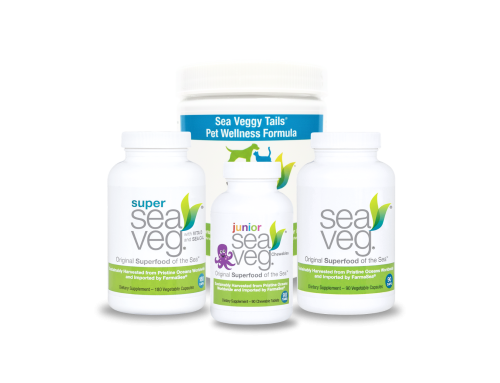
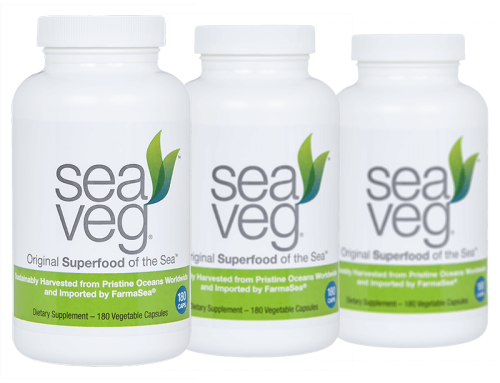
Sea Veg®’s seaweed supplement formula includes 12 wild-harvested sea plants, with a specific boosted concentration of wakame for fucoidan content. The formula is designed to deliver the full nutritional spectrum that marine nutrition offers — iodine from brown seaweeds, different prebiotic fibers from red and brown seaweeds, bioavailable calcium from calcified seaweeds, and natural Omega-3/6 fatty acids in their food-matrix form.
This is what “Everything from Alpha to Omega®” actually means. Not a marketing phrase. A nutritional reality.
A few things that distinguish Sea Veg® from other multi-species formulas:
- Wild-harvested, not farmed: wild seaweed from pristine ocean environments concentrates minerals more effectively than farmed seaweed in controlled conditions
- Specifically boosted wakame: fucoidan content is one of the most scientifically supported reasons to take seaweed. We’ve formulated to maximize it.
- No synthetic additions: the Sea Veg® delivers naturally occurring Vitamin D, Omega-3/6, iodine, calcium, and fucoidan from food sources — not lab-synthesized compounds added to a seaweed base
- Transparency about sourcing: we can tell you where our seaweed comes from and answer questions about it. That’s what being the official source means.
So Which Is Right For You?
Here’s the honest decision framework:
Choose sea moss if:
You’re primarily interested in gut health and prebiotic fiber support, you enjoy the gel form and want to incorporate it as a food, and you’re not specifically looking for fucoidan or broad-spectrum marine nutrition. Sea moss is a legitimate food choice. It’s just not a complete marine nutrition strategy.
Choose a standardized kelp supplement if:
Your primary goal is thyroid and iodine support, you want a simple and inexpensive single-purpose supplement, and you’re not looking for the broad nutritional spectrum. Kelp tablets are fine for that specific purpose. Just understand what they’re not giving you.
Choose a 12-plant wild-harvested blend if:
You want whole-food marine nutrition across the complete spectrum — iodine, fucoidan, natural Vitamin D, Omega fatty acids, prebiotic fibers, bioavailable calcium, and the full range of bioactive compounds that different seaweed species deliver. If you’re replacing a multivitamin with something your body actually recognizes as food, this is the category.
Thousands of Sea Veg® customers have said the same thing after making this choice: “I can’t believe I waited so long to try this.”
If you’re already here reading this comparison, you’re doing the research. You deserve a supplement that’s doing the same work behind the label.
Why settle for one species when you can have the full spectrum?
If you’re looking for more than just a thyroid supplement or a social media trend, it’s time to experience 12-plant marine nutrition. Get the iodine, fucoidan, and minerals your body recognizes—all in one wild-harvested formula.