
There’s an uncomfortable fact circulating in supplement research that most brands would prefer their customers didn’t know: independent testing of fucoidan supplements has found that roughly 10% of products tested contain little to no actual fucoidan. Some contained primarily starch or glucose instead.
Ten percent sounds small. But when you multiply that across an industry where fucoidan is increasingly cited as a “superfood” compound — and where consumer awareness is growing faster than quality controls — the probability that the fucoidan supplement in your cabinet is what the label says it is deserves serious scrutiny.
I’m Greg Good, founder of Sea Veg®. I’m not writing this to sell you something (though I’d obviously prefer you buy from a trustworthy source). I’m writing this because the education-first approach is the only approach I’ve ever believed in. If you’re spending money on fucoidan, you deserve to know what you’re actually getting.
What Is Fucoidan, and Why Does It Matter?
Fucoidan is a sulfated polysaccharide found primarily in the cell walls of brown seaweed species — wakame, bladderwrack, mozuku, and kombu among them. It has been studied in over 2,300 published scientific papers, making it one of the most researched natural compounds in marine biology.
The research covers a remarkable range of potential applications: immune system modulation (fucoidan has been shown to activate natural killer cells, macrophages, and T lymphocytes), anti-inflammatory properties, gut health and prebiotic effects, cardiovascular support, skin healing, and cellular protective mechanisms.
This isn’t fringe science. Memorial Sloan Kettering Cancer Center’s integrative medicine database has published information on fucoidan. Research institutions across Japan (where fucoidan-rich seaweed has been part of the traditional diet for centuries), the US, and Europe have contributed to that body of 2,300+ studies.
Fucoidan is arguably the most scientifically studied compound the supplement industry barely knows how to talk about. That gap — between the science and the consumer understanding — is exactly where bad actors hide.
Why Fucoidan Is Hard to Fake-Proof for Consumers
Most supplement mislabeling is harder to detect than, say, buying counterfeit goods. You can’t look at a capsule and tell what’s inside. And fucoidan has specific characteristics that make adulteration particularly tempting for low-quality manufacturers:
- Fucoidan is expensive to source and process properly. High-potency extracts from wild brown seaweed cost significantly more than corn starch or glucose.
- Lab testing for fucoidan identity requires specific methods (colorimetric assays for sulfate content, or more precise HPLC analysis) that most consumers obviously can’t perform.
- The supplement market for fucoidan is growing faster than regulatory scrutiny, creating a window for brands to make claims they can’t back up.
- Fucoidan doesn’t have a strong “recognizable” taste or smell that alerts consumers to substitution.
The result: a meaningful percentage of products sold as “fucoidan supplements” are, at best, diluted versions of what they claim to be, and at worst, something else entirely.
The 5 Questions to Ask Any Fucoidan Brand
1. What is the seaweed source, and is it named specifically?
High-quality fucoidan comes from specific brown seaweed species — wakame (Undaria pinnatifida) is among the most studied and highest-potency sources. Reputable brands name their source species. “Seaweed extract” or “brown algae blend” without species identification is a red flag.
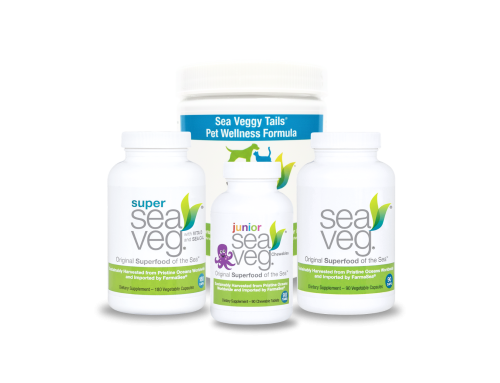
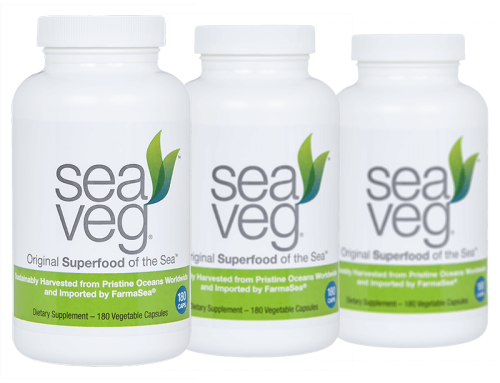
Sea Veg®’s seaweed supplements use wild-harvested wakame as the primary fucoidan source, with a specifically boosted concentration relative to the other 11 sea plants in the formula.
2. Is the seaweed wild-harvested or farmed?
Wild-harvested seaweed from pristine ocean environments concentrates minerals and bioactive compounds (including fucoidan) more effectively than farmed seaweed grown in controlled conditions. Fucoidan production in seaweed is partially a stress response — the plant produces more when growing in natural ocean conditions.
Farmed seaweed often has lower fucoidan concentrations than wild sources. Any brand that can’t tell you the harvest method should raise questions.
3. Has the product been third-party tested for fucoidan identity?
This is the most important question and the one most brands can’t answer. Third-party testing from an independent laboratory verifying not just fucoidan presence but fucoidan concentration and identity is the gold standard. Ask brands for a Certificate of Analysis (COA) from an independent lab.
If a brand can’t provide this — or provides only internal testing — proceed with caution.
4. What does the label actually say, and what does it not say?
Look for specific quantification. “Fucoidan extract” tells you very little. “85% fucoidan from Undaria pinnatifida, verified by HPLC analysis” tells you something meaningful. Many brands use “fucoidan” in a headline and bury the actual source and concentration in small print.
Also look for what’s used as the extract carrier or base. Maltodextrin is a common filler in powdered extracts. If the first or second ingredient after fucoidan is a starch-based filler, the effective concentration is likely lower than the label implies.
5. Does the brand have a long track record, and are they responsive about sourcing questions?
Sea Veg® has been sourcing and formulating seaweed supplements since before fucoidan became a marketing trend. Our formula isn’t built around fucoidan as a marketing hook — it’s built around 12 wild-harvested sea plants where fucoidan naturally occurs in the whole-food matrix it was evolved in.
When customers ask us sourcing questions, we answer them. That’s what being the official source means.
The Whole-Food Fucoidan Difference
There’s another dimension to this that goes beyond mislabeling: even when a fucoidan supplement is exactly what it says it is — a concentrated fucoidan extract — it’s missing something that the whole seaweed plant provides.
Fucoidan in brown seaweed doesn’t exist in isolation. It exists alongside alginates, laminarin, fucoxanthin, iodine, minerals, amino acids, vitamins, and dozens of other bioactive compounds that interact with and potentially enhance fucoidan’s effects. The research on fucoidan has largely been conducted using whole seaweed extracts, not isolated fucoidan.
When you take a concentrated fucoidan extract, you’re getting one instrument. When you take whole-food Sea Veg®etables — like Sea Veg®’s 12-plant formula — you’re getting the whole ensemble.
Your body evolved to absorb nutrients from food, not from isolated fractions of food. The whole-food matrix matters — and it’s one reason Sea Veg®’s approach produces the results it does.
What Real Fucoidan From Real Sources Does
For customers who ask me what they can actually expect from authentic fucoidan as part of a whole-food seaweed supplement formula, I share what the published research covers and what our customers report:
- Immune system support: fucoidan has been shown in multiple studies to increase natural killer cell activity and support the innate immune response
- Gut health: fucoidan behaves as a prebiotic in the gut, supporting the growth of beneficial bacteria and reducing pathogenic bacteria
- Anti-inflammatory effects: multiple studies show fucoidan reduces markers of systemic inflammation
- Skin repair: the research on wound healing and skin cell regeneration is particularly compelling, and aligns with some of the most remarkable customer stories we’ve received
- Cardiovascular health: preliminary research on blood pressure and cholesterol effects is ongoing
I don’t make clinical promises. But the research is real, the mechanism is understood, and the customer results speak for themselves.
One Last Thing: Beware the Imitators
Sea Veg® has faced direct imitation in the market. Seatrition has copied our formula and our approach — but not our sourcing standards, not our wild-harvest quality, and not the decades of experience behind our formulation.
Buyseaveg.com is the official source for Sea Veg®. When you buy from us directly, you know exactly what you’re getting, where it came from, and why it’s formulated the way it is.
That’s what “the official source” actually means.
Don’t gamble with your health on unverified extracts.
Get the real thing, directly from the official source. Our 12-plant formula is wild-harvested and third-party tested to ensure you’re getting authentic, high-potency fucoidan in its natural whole-food matrix.