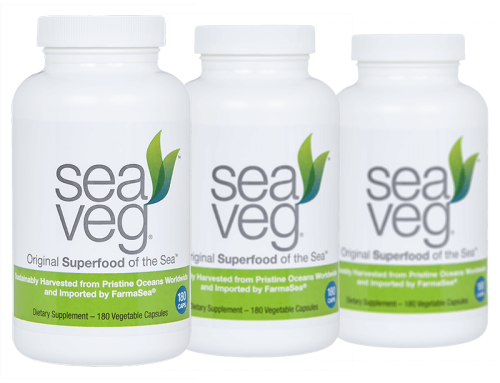


Sea Veg contains organic vegetarian and vegan Vitamin D, Iodine, Omega-3, Omega-6 and fucoidan in our premium blend of nutrient-rich sea plants. We often get asked what exactly Omega-3 is, why it’s an important part of a healthy diet, and what happens if your diet is lacking in Omega-3. We’ve put together a brief article that will hopefully answer all of these questions. Keep reading to learn more!
What is Omega-3?
Omega-3 is a fat, and a very important one at that. Two crucial Omega-3s– EPA and DHA — are mostly found in fish. Alpha-linolenic acid (ALA), another omega-3 fatty acid, is found in plant sources such as nuts and seeds. Your body need these fatty acids to function. Omega-3s are a specific type of polyunsaturated fatty acid, meaning they contain more than one double bond in their chemical structure. The “3” refers to where in the chemical structure the first double bond occurs. Our bodies don’t produce Omega-3, so we have to get it through our diets.
How much Omega-3 do we need?
There is no established Adequate Intake (AI) or Dietary Reference Intake (DRI) in the United States for EPA and DHA omega-3s. A growing number of expert bodies and health professionals recommend 250 milligrams (mg) to 1,000 mg of EPA and DHA per day.
What are the health benefits of Omega-3?
According to WebMD, they help with:
- Blood fat (triglycerides). Fish oil supplements can lower elevated triglyceride levels
- Rheumatoid arthritis. Fish oil supplements (EPA+DHA) can curb stiffness and joint pain
- Depression
- Baby development
- Asthma
- ADHD
- Alzheimer’s disease and dementia
How can you get more Omega-3 in your diet?
Healthline recently put out a great list of sources for Omega-3:
- Mackerel
- Salmon
- Cod Liver Oil
- Herring
- Oysters
- Sardines
- Anchovies
- Caviar
- Flaxseed
- Chia seeds
- Walnuts
- Soy Beans
If you’re not a big seafood fan, your list of options is fairly short. EPA and DHA are found in some animal foods, seafood and algae. You may find some foods that are fortified with Omega-3, including eggs, margarine, milk, juice, soy milk or yogurt.
What happens if your diet is lacking in Omega-3s?
There are a number of signs which indicate a fatty acid deficiency. Here are a few:
- Rough or dry ‘bumpy’ skin
- Dry, dull or ‘lifeless’ brittle hair and dandruff
- Soft, peeling or brittle nails
- Excessive thirst, frequent urination
- Sleep problems (especially difficulties in settling at night and waking in the morning)
- Attention problems (distractibility, poor concentration and difficulties in working memory)
- Emotional sensitivity (such as depression, excessive mood swings or undue anxiety)
Keep in mind that these symptoms do not exclusively indicate a deficiency, so ask your doctor before assuming it’s an Omega-3 deficiency.
How can you ensure your diet isn’t lacking Omega-3s?
As with any nutrient or mineral, a healthy, diverse diet with very limited processed foods is a good place to start. You can also add a high-quality supplement such as Sea Veg® seaweed supplements from FarmaSea® which contain Omega-3s. Supplements such as Sea Veg also give you additional health benefits that seaweed offers in addition to providing crucial Omega-3s. Learn about all the health benefits of seaweed by reading the Sea Veg blog.
Omega-3s are a critical component of any healthy diet. Be sure you’re getting enough to stay healthy and strong.